How to specify tatami and low seating
Low seating changes the ergonomics completely. The back angle and the floor contact matter more than they do at dining height.
Published by JP Furniture · Chair manufacturer in Foshan, China · 2026-09-26
Height bands
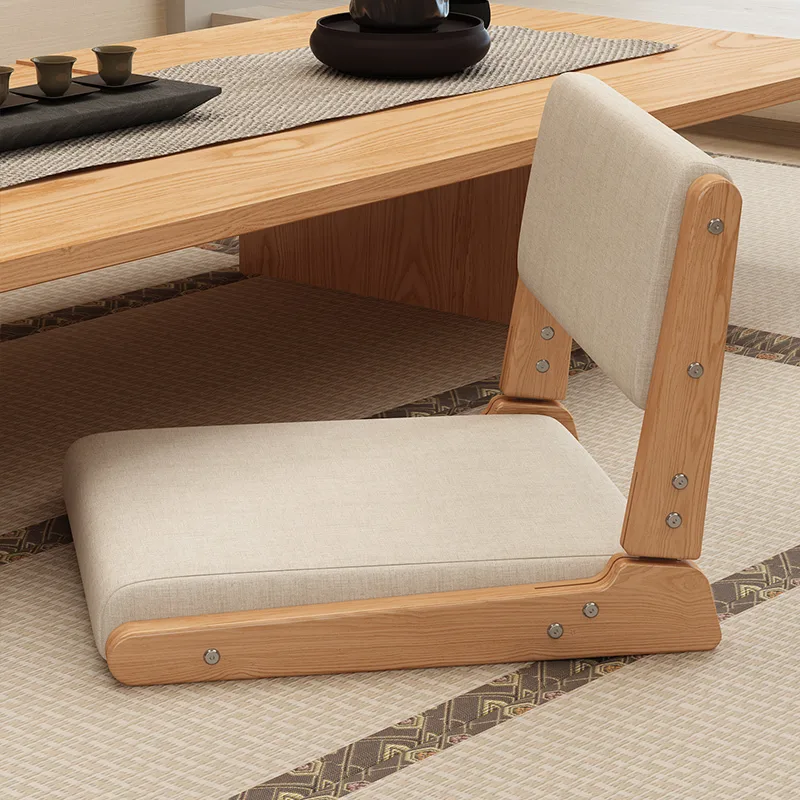
- Floor level: 80–150 mm — legless frames and floor cushions with a backrest.
- Low dining: 250–320 mm — pairs with 300–400 mm low tables.
- Standard-height transition: 380–400 mm — for rooms that mix low and conventional tables.
Backrest angle and support
At floor level the pelvis rotates backwards, so a low chair needs a more open seat-to-back angle than a dining chair — typically 105–115° rather than 95–100°. A legless frame without an adequate back angle is uncomfortable within twenty minutes.
Where there is no backrest at all, the seat needs a rear lip or wedge to stop the user sliding backwards.
Floor protection
Low seating concentrates load directly onto tatami, timber or stone:
- Full-width felt pads rather than small glides.
- No exposed fasteners on the underside.
- A base rail that spreads load rather than four point contacts.
See the tatami chair range.