What outdoor chairs need to survive
Outdoor seating fails from UV, salt and trapped water — usually in that order. Indoor specifications do not transfer.
Published by JP Furniture · Chair manufacturer in Foshan, China · 2026-09-26
The three failure modes
- UV — chalks and fades coatings, embrittles plastics and dries natural fibres. Look for a stated UV-stable coating, not just 'outdoor'.
- Salt and chlorides — pit metals. Coastal and poolside sites need 316 stainless or a marine-grade alloy with proper pre-treatment.
- Trapped water — the most common and most preventable. Any tube that can hold water must have a drainage hole, or it will freeze, split or rust from the inside.
Salt spray hours
ASTM B117 salt spray testing is the usual reference. As a rough guide for coated metal:
- 250–500 hours — sheltered urban terrace.
- 750–1,000 hours — exposed terrace, general outdoor.
- 1,000+ hours — coastal or poolside.
Ask what the hours were tested against and on which substrate — a coating result on aluminium does not carry over to steel.
Materials that hold up
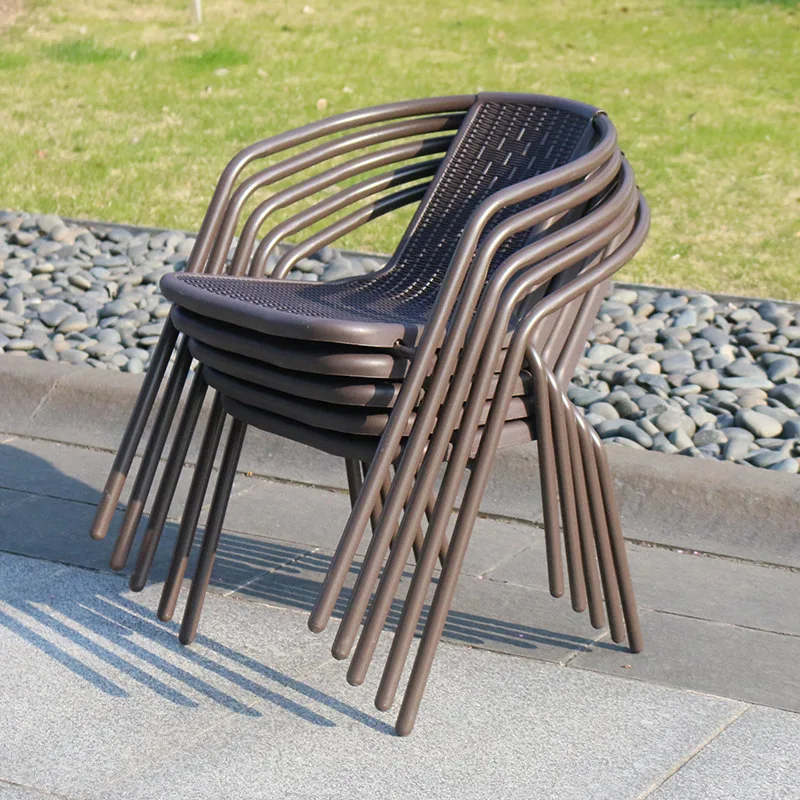
- Powder-coated aluminium — light, rust-proof, the default for most terraces.
- 316 stainless — coastal and poolside; see stainless grades.
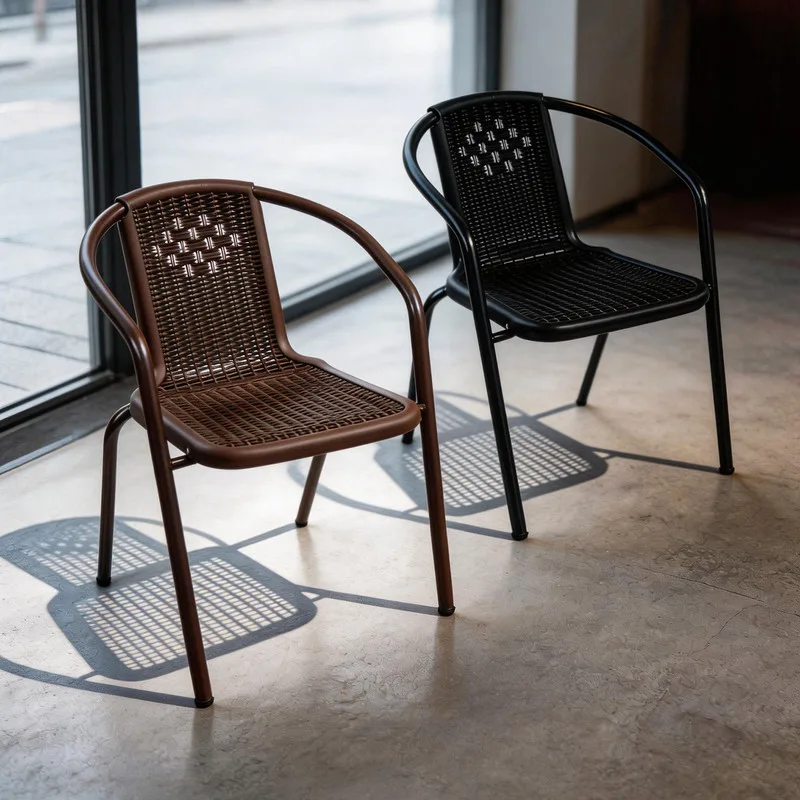
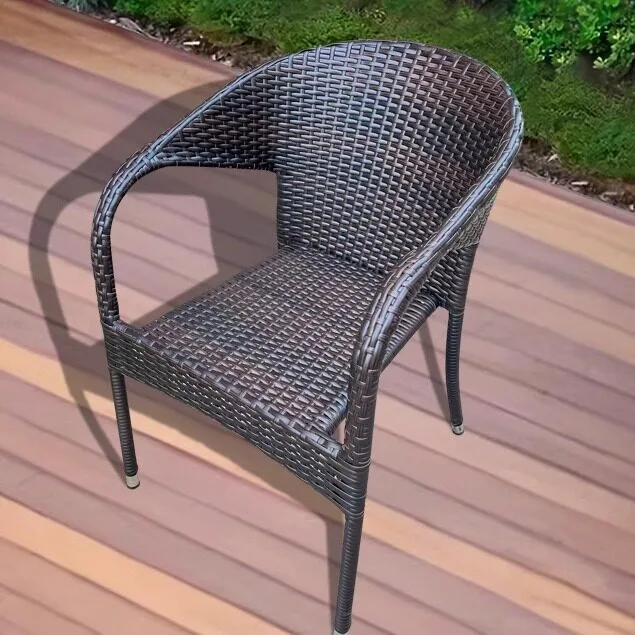
- Synthetic rattan / rope — UV-stabilised PE, not natural rattan; see synthetic vs natural rattan.
- Teak — the durable natural option, with a silvering patina.
Browse the outdoor chair range.