Getting water off an outdoor chair seat
A 450 by 450 mm seat collects about 4 litres of water in a 20 mm rain shower. What the seat does with those 4 litres over the following hour decides whether the terrace opens for breakfast or stays roped off.
Published by JPChairs · Chair manufacturer in Foshan, China · 2026-11-05
Rain on a closed seat is a bucket
A flat closed seat shell with no drainage holds a surprising amount: 20 mm of rain over a 0.2 square metre seat is roughly 4 litres, and a shell with a 10 mm upturned lip can trap 0.5 litres of it. The first guest at 07:30 finds out before the staff does. Drainage is a geometry problem before it is a materials problem: every seat needs a lowest point that is not the middle.
- Seat pan tilt: 1.5 to 2 degrees toward the rear edge, enough to move water off in under a minute.
- Drain holes: 8 to 10 mm diameter at the lowest edge, spaced no more than 120 mm apart on seats wider than 450 mm.
- Lips and upstands: any upstand above 5 mm needs its own weep holes, or it traps exactly the water it was drawn to keep off.
Four drainage patterns and where each wins
Most commercial outdoor seats fall into four families, and they dry at very different speeds:
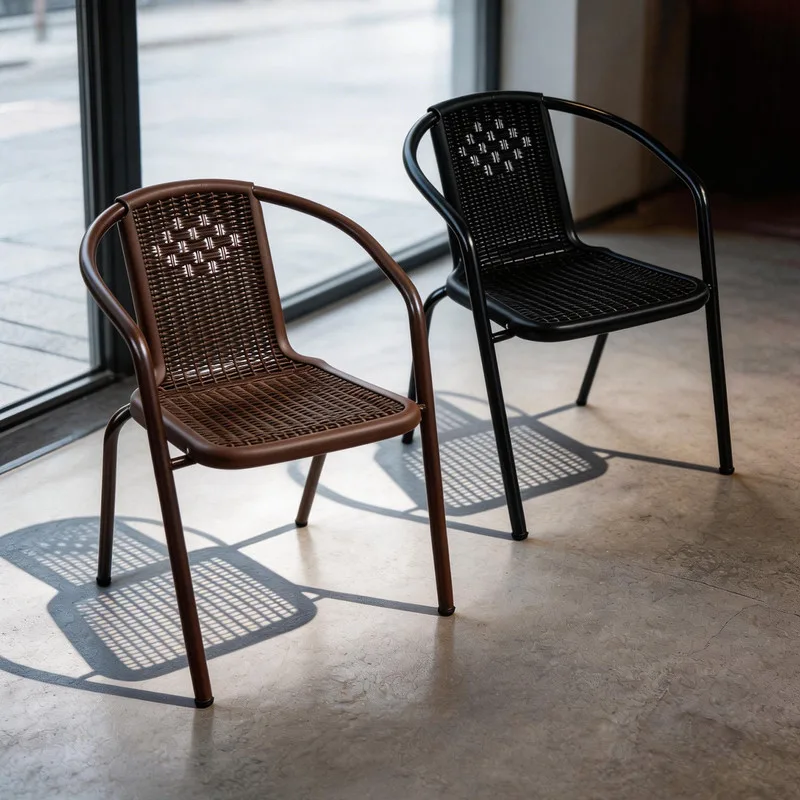
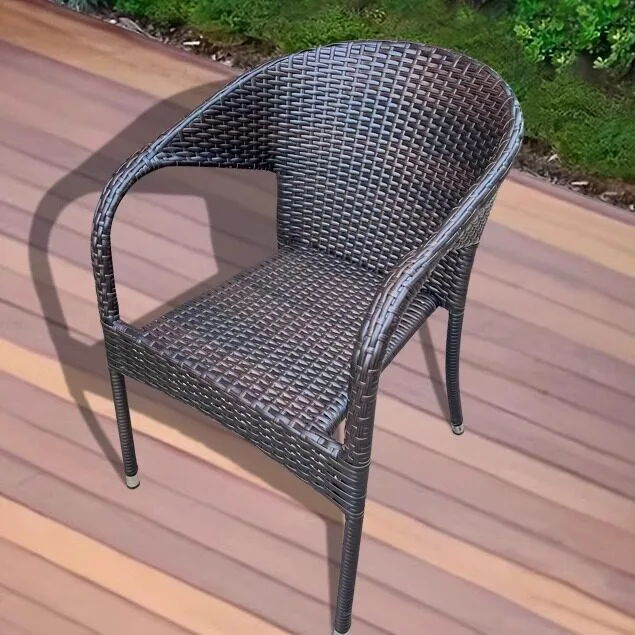
- Open slats: PE rattan or teak slats with 12 to 15 mm pitch drain instantly; only the slat surface stays wet, 45 to 60 minutes to touch-dry.
- Sling mesh: textilene or woven sling over an aluminium frame drains through the fabric and dries in 1 to 2 hours.
- Quick-dry padded: a reticulated foam pad with drain holes dries to the surface in 3 to 4 hours.
- Closed shell: even with 10 mm holes and tilt, a standard foam pad inside takes 24 to 36 hours and smells within a week in humid weather.
Quick-dry foam: the actual numbers
Quick-dry foam is reticulated open-cell foam, with at least 90 per cent of cells open end to end, so water passes through instead of soaking in. In our tests a 60 mm pad sheds 90 per cent of its water within 10 minutes when stood on edge, against 8 to 10 times slower for standard foam. Two details make it work in production:
- Compression set: still held to 5 per cent or less per ASTM D3574 method D; drainage is no excuse for a pad that flattens in a season.
- Scrim wrap: a light polyester mesh around the foam stops crumbs migrating into the 10 mm drain holes, which otherwise clog within one season.
The cost is roughly USD 2.50 to 4.00 per seat over standard foam, which is usually cheaper than one morning of lost covers revenue.
Drying times we measure, not guess
We hose-test every new outdoor seat design: 20 minutes of spray to simulate a steady shower, 30 seconds tipped on edge to shed, then timed indoors at 24 degrees and 60 per cent relative humidity:
- Slatted PE rattan: surface dry in 45 to 60 minutes.
- Sling mesh: 1 to 2 hours, with the frame rail under the fabric dry shortly after.
- Quick-dry padded seat: 3 to 4 hours to surface dry, 8 hours to full.
- Closed shell with standard foam: 24 to 36 hours, with standing water in the pan unless the tilt and holes are right.
A design that fails the timing gets a drain detail changed and retested, not a softer sentence in the spec sheet.
Details that stop hidden water traps
The seat gets the attention, but the frame holds the water:
- Weep holes: a 6 mm hole at the lowest point of every closed tube or box section; a 40 mm square tube otherwise traps about 16 ml of water per 100 mm of length.
- Frame-to-sling gap: a 5 mm gap between sling edge and frame rail stops water wicking into the seam and sitting against the stitching.
- Grommets, not glue: UV-stable drain grommets rather than glued mesh, which lifts in the sun within a season.
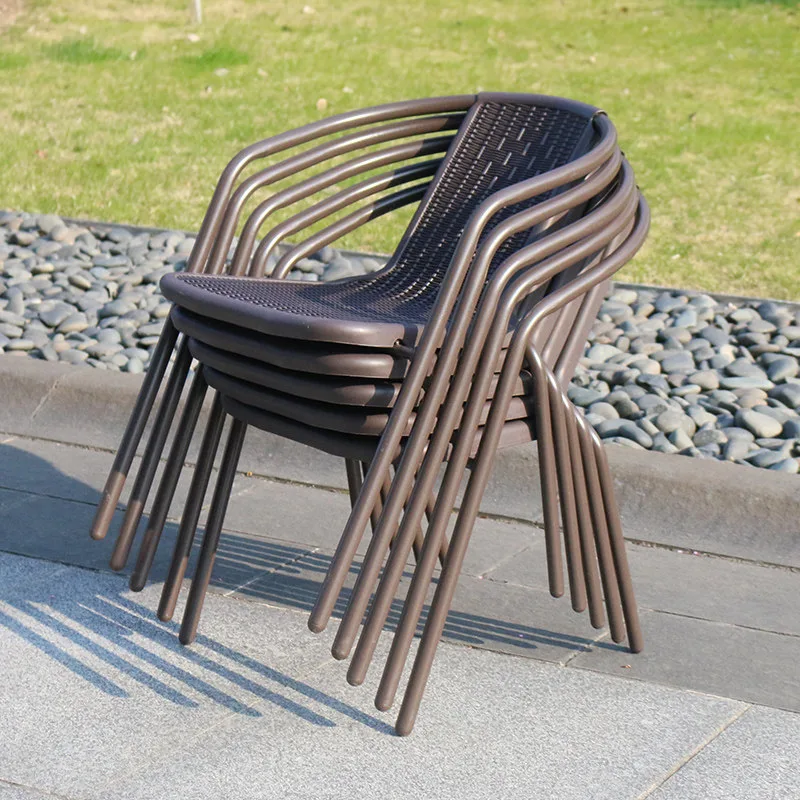
- Stack clearance: stacked chairs trap water between seats; 15 mm spacer bumps between seat pans let air move through a stack.
What we verify before a terrace order ships
Three checks close out an outdoor seat design:
- Residual water: after the 20-minute spray and 30-second tip, less than 5 ml left in the pan.
- Pad shed rate: the quick-dry pad must shed 95 per cent of absorbed water within 10 minutes on edge.
- Dry-time signoff: the measured hours from the hose test go on the spec sheet, so a buyer in a humid market knows what the morning after rain looks like.
The same water-first thinking runs through our outdoor chairs with quick-dry seats, and the packing questions around damp climates are covered in our container moisture FAQ.