Woven chair seats: cane, rattan and rope by the numbers
Woven seats look like a craft decision and behave like an engineering one. Strand size, pitch and tension decide whether a seat holds its shape for eight years or starts drumming in the first season, and all three can be written into a specification before a frame is bent.
Published by JPChairs · Chair manufacturer in Foshan, China · 2026-10-25
Three weaving families and where each belongs
Everything woven on a chair falls into one of three families, and each has its own size, pitch and lifespan:
- Open cane webbing: a machine-woven sheet of flat-oval strand 2.0 to 2.4 mm wide, with a hexagonal opening of 10 to 13 mm across the flats. 12 mm is the common pitch. It is pressed into a 6 x 6 mm groove with a 0.55 to 0.70 mm spline and takes 8 to 12 minutes a panel.
- Hand cane: round strand in 2.0 mm and 2.5 mm, worked in a seven step pattern over rails drilled with 8 mm peg holes at 55 to 70 mm centres. This is the pattern you see on a classic bentwood seat.
- Flat core and half-round rattan: flat core 6 to 10 mm wide and 1.2 to 1.6 mm thick, half-round 3.0 to 4.0 mm wide. Both come from the rattan palm and both need water before they bend.
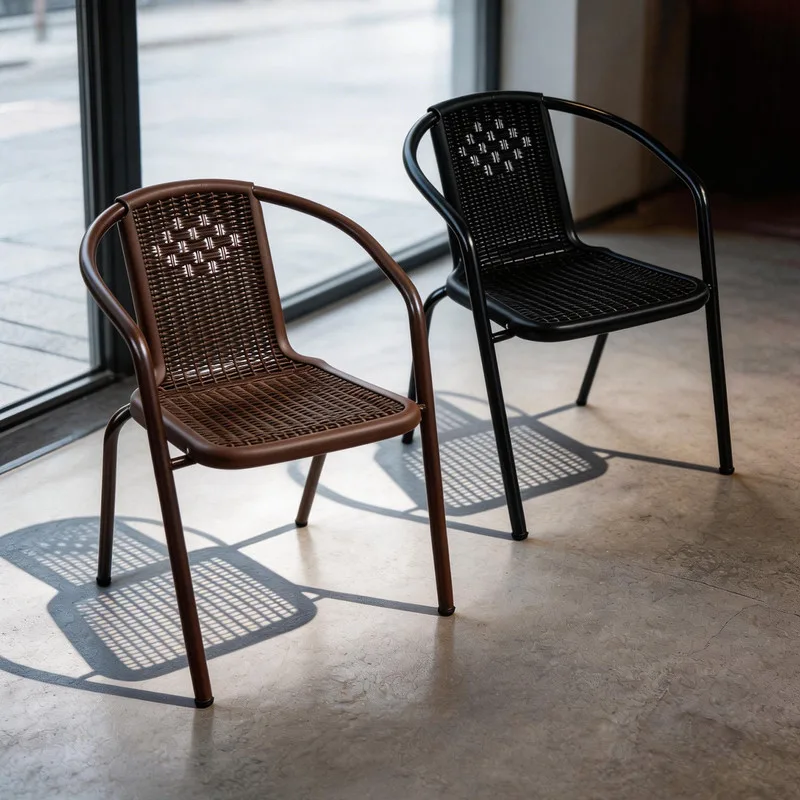
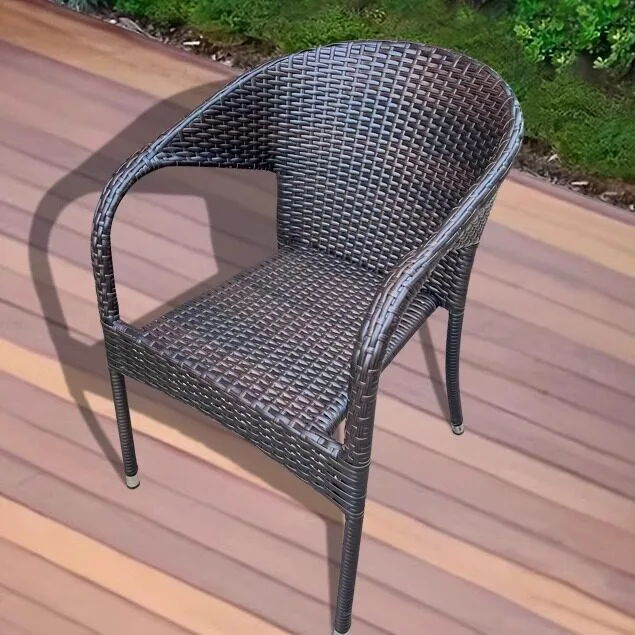
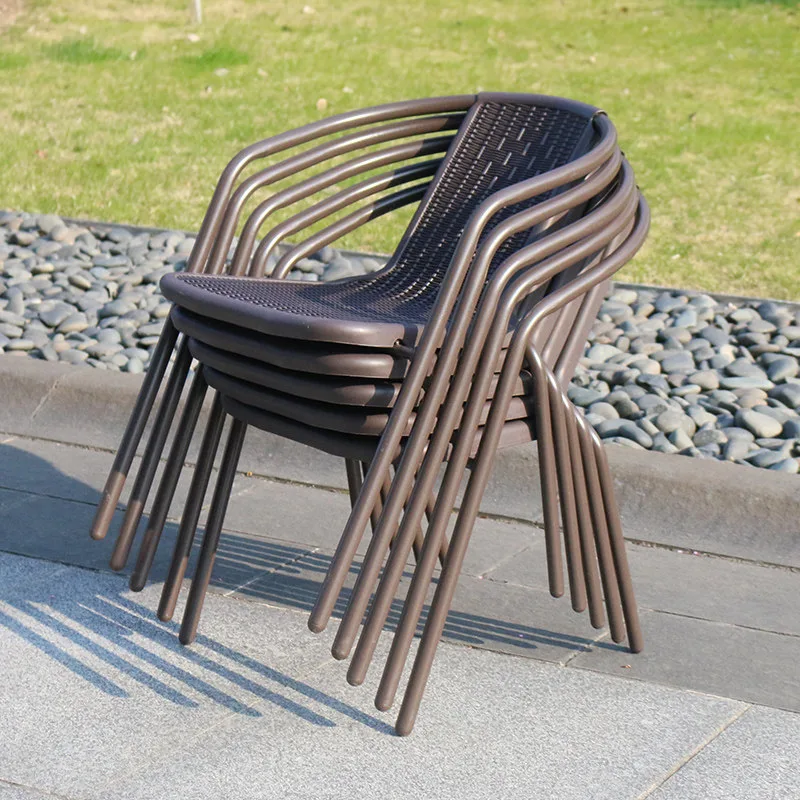
- Synthetic: PE or PVC flat rattan 8 to 15 mm wide and 1.1 to 1.4 mm thick, round extrusions in 3 to 5 mm, and braided olefin rope in 5, 6 and 7 mm. This is what goes outdoors.
The numbers to hold on a weave
These five measurements go on every weaving drawing we issue, and they are what a sample approval should confirm:
- Strand tension: 25 to 40 N, read on a hand held gauge. Under 20 N the panel drums under a 70 kg guest; over 50 N the strand splits along its length within about six months.
- Unsupported span: keep a seat panel under 320 mm between rails. A 420 mm span in 2.0 mm cane sags 8 to 11 mm in the first month of service and does not recover.
- Permanent set: 110 kg for 24 hours, and the panel has to come back to within 4 mm of its original line.
- End fixing: 18 gauge stainless staples with a 6 mm crown at 25 to 30 mm spacing, or a spline in a 6 mm deep groove. Staples in carbon steel rust through in 8 to 14 weeks outdoors.
- Soaking: natural cane takes 20 to 30 minutes in water at 40 C before weaving. Skip it and roughly one strand in twelve cracks on the first bend.
Rope and cord outdoors
Outdoor rope is the fastest growing part of the woven range, and it fails in predictable ways:
- Breaking strength: 1,200 N for 5 mm braided olefin, 2,200 N for 7 mm. Spec at least five times the working load, because a guest dropping into a seat generates about 1.5 times their weight.
- Wrap spacing: 30 to 45 mm centre to centre. Below 30 mm the cord weight doubles, the panel dries slowly and mould appears in shaded courtyards within one season.
- UV: 3,000 hours QUV-B under ASTM G154 cycle 1, with colour change of delta E 3 or less and no surface cracking. In service that is roughly five years for solution-dyed acrylic, three in central Europe and two in the Gulf for spun-dyed polypropylene.
- Drainage: hollow core rope holds 2 to 4 g of water per metre. Either specify a closed-cell core or add 4 mm weep holes at the lowest wrap, or the frame rusts from the inside.
- End sealing: every cut end gets a three second heat pass or a cap. Unsealed PE ends wick water and swell 3 to 5 per cent in a wet season.
Time and labour behind a woven seat
Weaving is labour, and labour is what sets the lead time. These are the figures from our own line:
- Hand-caned seat: 55 to 70 minutes each, using 1.1 to 1.4 m2 of webbing, at USD 9 to 16 of labour.
- Machine-woven sheet panel: 8 to 12 minutes including the spline, at USD 1.80 to 3.20.
- Full synthetic rattan wrap on an aluminium frame: 90 to 140 minutes a chair, at USD 22 to 38.
- What it does to the schedule: a 30 seat hand cane order adds 4 to 6 working days on top of the standard 45 day build. Tell us at order placement, because at day 30 there is no way to find the weavers.
- Repair: splicing one damaged strand takes 25 minutes; a full re-cane runs about 60 per cent of the original seat cost.
Failure modes worth writing into the spec
Four of these show up often enough that we now specify against them by default:
- Dry-out cracking: natural cane splits below 40 per cent relative humidity. Ship with a storage note and keep the room at 45 to 60 per cent.
- Strap marks: PET strapping at 450 N over 8 mm flat rattan leaves a 0.4 mm dent that never recovers. Drop to 250 N with a 3 mm corner board.
- Staple rust: 18 gauge carbon steel shows rust in 8 to 14 weeks outdoors. 304 stainless costs USD 0.35 to 0.60 more a chair and removes the problem.
- Colour drift: resin dye lots vary, so we hold every batch to delta E 1.2 or less against the approved sample and keep a retained swatch for 12 months.
- Load path: a woven seat does not carry load on its own. The perimeter rail takes it, which is why a woven panel on a frame with no front rail is a specification error, not a weaving one.
What to send us before we quote
Five items, and the quote comes back in a day instead of a week:
- Photo or drawing of the pattern, with the pitch marked in mm.
- Strand material and width, or the finish you want if you are open on material.
- Indoor or outdoor, and the UV rating if outdoor.
- Quantity and target delivery, because hand weaving sets the schedule.
- Any standard the project has to meet, typically EN 16139 level 1 for contract seating.
Our outdoor woven range is on the woven outdoor chairs, and the sample and approval sequence that precedes bulk weaving is described on the OEM weaving samples.