Bar stool upholstery: disinfectant and spill load
Bar stool seats get cleaned more often than any other surface in the room and re-covered more often than the frame under them. Most of the failures we see come from the cleaning routine rather than from the guests.
Published by JPChairs · Chair manufacturer in Foshan, China · 2026-11-16
The chemical load in one service week
Designing a bar seat is a chemistry exercise before it is a design exercise, because the seat is wet with something most of the evening.
- Beer sits at pH 4.0 to 4.5, wine at 3.2 to 3.6 and a citrus garnish at 2.2, so a seat edge meets acid at every turn of a busy bar.
- Front-of-house crews wipe seats 4 to 8 times per shift with quat sanitiser at 200 to 500 ppm, and closing crews often reach for hypochlorite at 500 to 1,000 ppm.
- Dwell time is written as 5 to 10 minutes on food-contact surfaces; on a seat it usually means wet until the next wipe, which can be 20 minutes.
- Seventy percent IPA is now the default quick wipe and is the harshest thing most contract vinyls meet in an ordinary week.
- One 200-seat bar running three turns does not clean 200 seats a day but roughly 1,200 wipes, because each setting is wiped once when the guest leaves and once before the next arrival.
Vinyl, polyurethane and silicone on a seat
Three materials cover 90% of the bar market, and they fail in three different ways.
- Contract vinyl runs 0.9 to 1.2 mm over a knitted backing and survives 50,000 Wyzenbeek double rubs; below 0.9 mm the seam pulls through before the face wears.
- Standard polyurethane hydrolyses: 5 weeks at 70 C and 95% RH turns it tacky, while hydrolysis-resistant grades hold 10 weeks and beyond.
- Silicone-coated fabric at 0.6 to 0.8 mm shrugs off hypochlorite and IPA entirely, at 18 to 30 USD per metre against 7 to 14 USD for vinyl.
- Phthalate-free plasticiser is now the default on EU and North American orders: expect 8 to 12% more material cost and a better cold crack result at -20 C.
- Foam under the cover decides how a spill ends: 35 to 40 kg/m3 closed-cell foam wipes clean, while 25 kg/m3 open-cell foam keeps the liquid and rusts the seat pan from the inside out.
Where the seat actually fails
Wear on a bar stool is not spread across the seat; it concentrates in three places we inspect on every returned sample.
- The front 60 to 70 mm of the seat takes the bag, the scuff and the heel, and that band goes through to backing first.
- Backrest tops lighten from hair product and hand cream, a full shade within 12 months on charcoal and navy covers.
- Stitch holes are leak paths: at 8 to 10 stitches per inch, dye and sanitiser wick into the foam, which then holds 2 to 3 times its own mass in liquid.
- Bonded nylon thread loses 40 to 60% of its strength after repeated hypochlorite contact, which is why bar work gets bonded polyester instead.
The spot test before a container ships
Every new cover is tested on an offcut from the same dye lot, and the report goes out with the documents.
- Five agents on one 200 x 200 mm piece: 70% IPA, 500 ppm hypochlorite, quat at 400 ppm, red wine and cooking oil, each covered for 24 hours at 23 C.
- Then 50 double rubs with IPA on the same spot, because one spill is never the failure mode in a real bar.
- Pass line: colour change within grey scale 4 to 5, mass change under 5%, Shore A hardness within 5 points, and no tack or seam lift.
- ASTM D1308 is the method we report against, so a buyer can compare two mills on the same scale instead of on adjectives.
Re-covering beats replacing
Pads are a consumable and frames are not, and the arithmetic only works when the pad was designed to come off.
- Seat pads in a busy bar need re-covering at 18 to 30 months, while the frame underneath lasts 8 to 12 years.
- Fitted covers cost 4.80 to 6.50 USD against 12 to 18 USD for a whole new stool, and the swap takes 6 to 8 minutes with an M5 weld nut torqued to 3.5 to 4.5 Nm.
- Holding 10% spare pads turns an out-of-service window of 6 to 8 weeks into a single shift.
- Over three years on 200 stools, planned re-covering saves roughly 1,100 to 1,600 USD against replacement before counting disposal labour.
Lines to put on the order
Upholstery is the one part of a bar stool a buyer cannot judge from a photograph, so the specification has to be explicit.
- Vinyl at 1.0 mm minimum, phthalate-free and hydrolysis resistant, with the Wyzenbeek figure printed on the spec sheet.
- Bonded polyester thread in the topstitch at 8 to 10 stitches per inch, shade matched to the cover lot.
- Removable pads on weld nuts rather than staples, so the venue can re-cover without an upholsterer on site.
- 8 to 10% extra fabric on the roll and a laminated cleaning card listing the agents that passed the spot test.
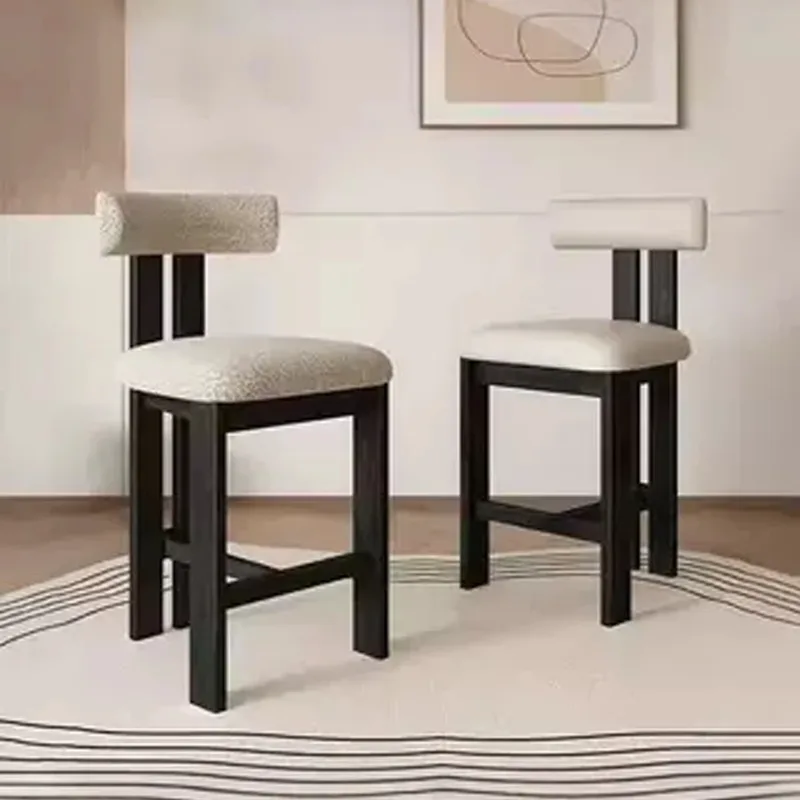
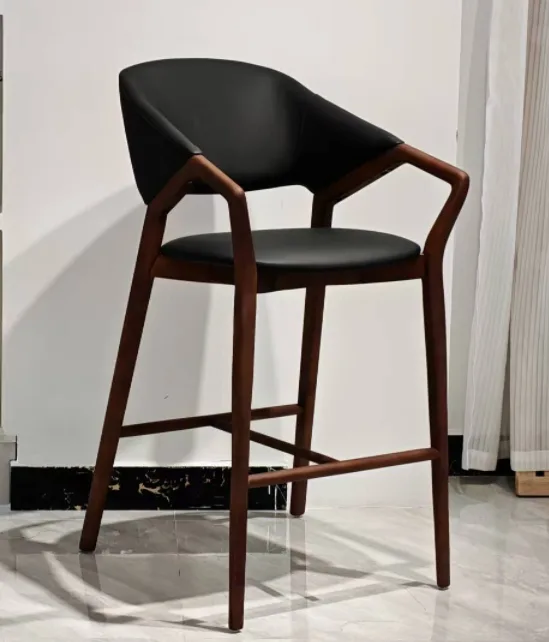
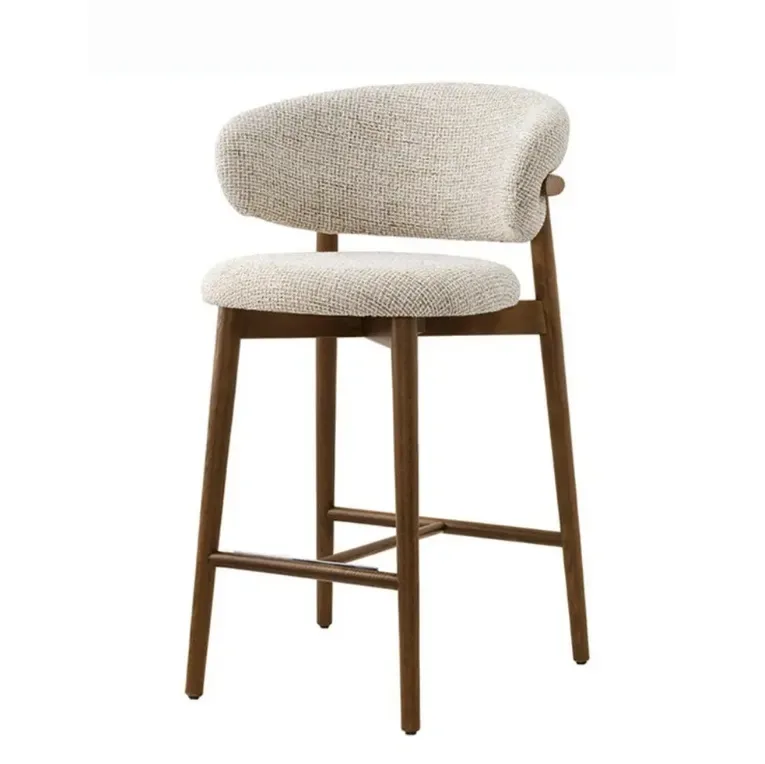
The upholstered commercial bar stools we build ship with that test report, and the care limits go to the cleaning contractor as a disinfectant compatibility FAQ.