Bar stool footrests and swivel mechanisms
On a bar stool, the two parts that fail are the footring weld and the swivel. Both are specifiable, and neither is expensive to get right.
Published by JP Furniture · Chair manufacturer in Foshan, China · 2026-09-26
Footring height and position
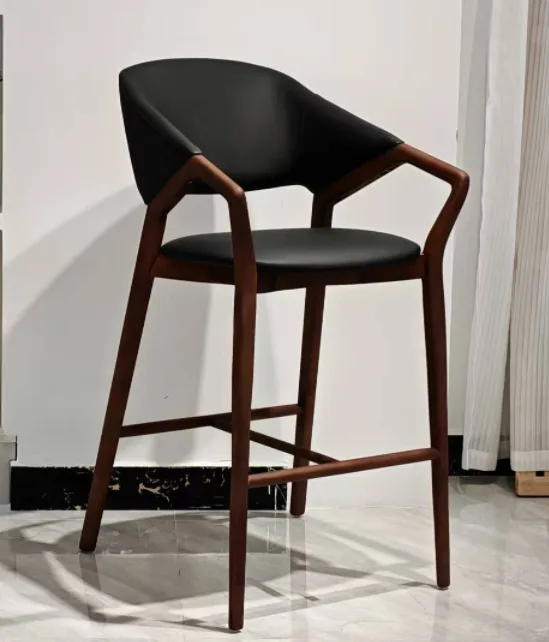
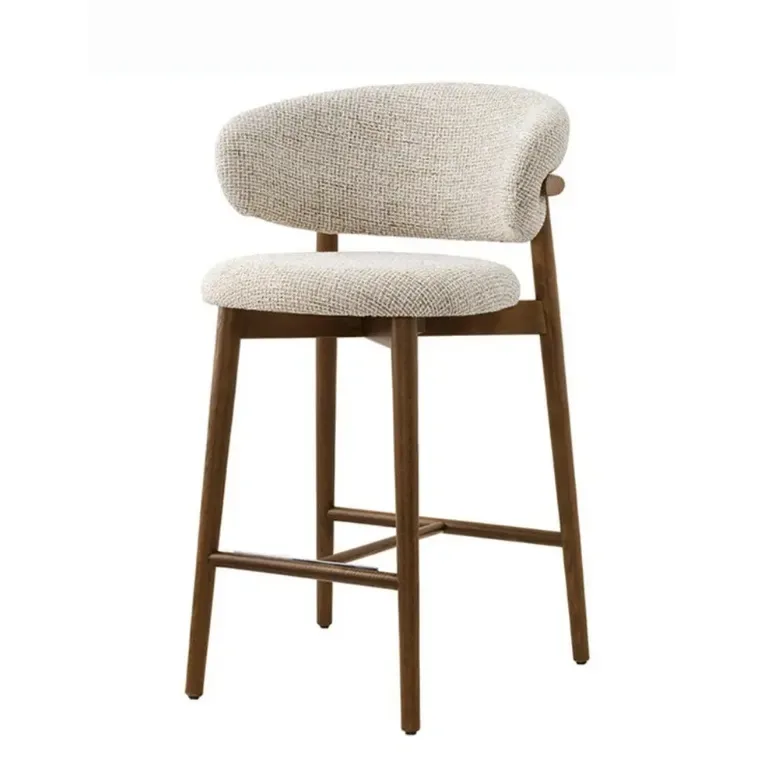
The footring should sit 150–200 mm below the seat and about 150–200 mm above the floor for a bar-height stool. Anything higher takes the load off the guest's feet; anything lower stops being a footrest.
The critical structural point is the weld between the ring and the column or legs. A ring welded only at its ends will work loose under a leaning guest — specify a continuous weld or a through-bolted boss.
Swivel mechanisms
- Plain bearing — cheapest, adequate for light use, wears into play.
- Ball-bearing race — the commercial standard. Smooth and serviceable.
- Memory-return swivel — springs the seat back to face the bar. Popular in hotel bars; the spring is the wear item.
A swivel should be specified with a cycle rating for a busy bar. Below 50,000 cycles, expect play within two years.
Specifying for a busy bar
- Continuous footring weld, or bolted and pinned.
- Ball-race swivel with a stated cycle rating.
- Replaceable glides — bar floors are hard on them.
- Seat height matched to the counter: see counter vs bar height.
Browse the bar stool range.