Extension leaves on restaurant tables: joint gaps, pin alignment, slide travel and the extra leg that keeps a 2,400 mm top flat
An extension leaf is the most complained-about fitting on a restaurant table, and nearly every complaint is the same two millimetres. Guests run a knife into the joint, staff trap crumbs in it, and six months later the two halves no longer meet flat. The fix is decided long before assembly: leaf width, substrate movement, pin alignment and whether the table gets a third leg.
Published by JPChairs · Chair manufacturer in Foshan, China · 2026-11-01
Leaf widths and how many covers they buy
Work on 600 mm of table edge per cover along the long side and 700 mm at the ends. That gives the steps most rooms ask for:
- 900 x 900 mm four-seat plus a 500 mm leaf becomes 900 x 1,400 mm for six.
- 1,800 x 900 mm six-seat plus a 600 mm leaf becomes 2,400 x 900 mm, which seats eight comfortably at 600 mm per cover and ten tightly.
- 1,200 mm round plus a 600 mm leaf becomes a 1,800 x 1,200 mm oval for six to eight.
Choose the mechanism from how often it is used. A butterfly leaf folds inside the top and stores itself, runs 400 to 500 mm wide, and one person opens it in about 15 seconds, which suits a room that resets twice a day. A loose drop-in leaf lives on a rack, takes two people and 40 to 60 seconds, but allows 600 to 700 mm and costs 30 to 40 per cent less. Telescopic slides let the halves pull apart and the leaf drop into the centre, 500 to 700 mm of travel, and they are the only option when there is no storage cupboard within 20 m of the table.
The joint gap: 1.0 mm target, 1.5 mm maximum
We hold the meeting joint at 1.0 mm and reject anything past 1.5 mm, measured at three points with a feeler gauge after the top has sat at 20 C and 50 per cent RH for 72 hours. The reasons are practical rather than cosmetic: 2 mm is wide enough to catch a knife tip and to hold a line of crumbs that staff cannot wipe out, and a dark line at eye level reads as damage to a guest even when it is inside tolerance.
Step is the other half of the same problem. Across the joint we allow 0.5 mm of height difference, checked by drawing a fingernail from one half to the other, because anything you can feel becomes a complaint. Both numbers depend on the substrate. A 900 mm solid oak top moves 4 to 6 mm across the grain between 8 and 14 per cent moisture content, and no pin holds that at 1.0 mm, so wide solid tops are specified at 8 per cent plus or minus 2 and still checked seasonally. An MDF or plywood core with veneer moves 1.0 to 1.5 mm over the same range and holds the gap all year.
Pins, slides and latches
- Alignment pins: two 8 mm steel pins per joint, 40 mm long, 20 mm into each half, hole position held to 0.5 mm and depth to 1 mm. Pins carry alignment; they should never carry load.
- Latches: two per leaf, engaging 12 mm minimum and holding the halves closed against 300 N of pull. A single central latch lets the far corners open 0.6 mm under a leaning guest.
- Slides: 500 to 700 mm of travel, rated 45 to 90 kg, deflection under 2 mm at full extension. Rate the slide on top weight plus 30 kg of tableware, not on the top alone.
- Hardware finish: zinc plated to 8 µm minimum, or stainless in coastal rooms. A seized slide is the most common reason an extension table stops being one.
The slide and latch set we fit is listed under our OEM extension hardware specifications, and the ratings above are the ones we keep in stock rather than the ones a catalogue claims.
When the table needs a third leg
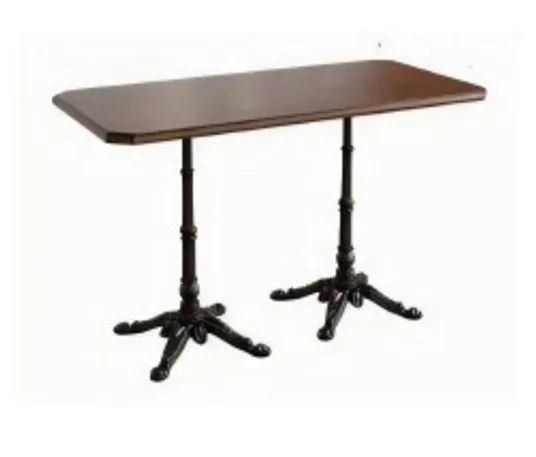
Deflection follows the L/300 rule, so over a 2,400 mm span the limit is 8 mm under a distributed service load. Two legs at 1,800 mm centres carry that on paper and still dish in the middle, because the load is never actually distributed. Put 30 kg 300 mm from the joint on a two-leg 2,400 mm top and the joint opens about 0.8 mm; put the same load on a table with a third leg or a base spanning at least 60 per cent of the length and it opens 0.2 mm.
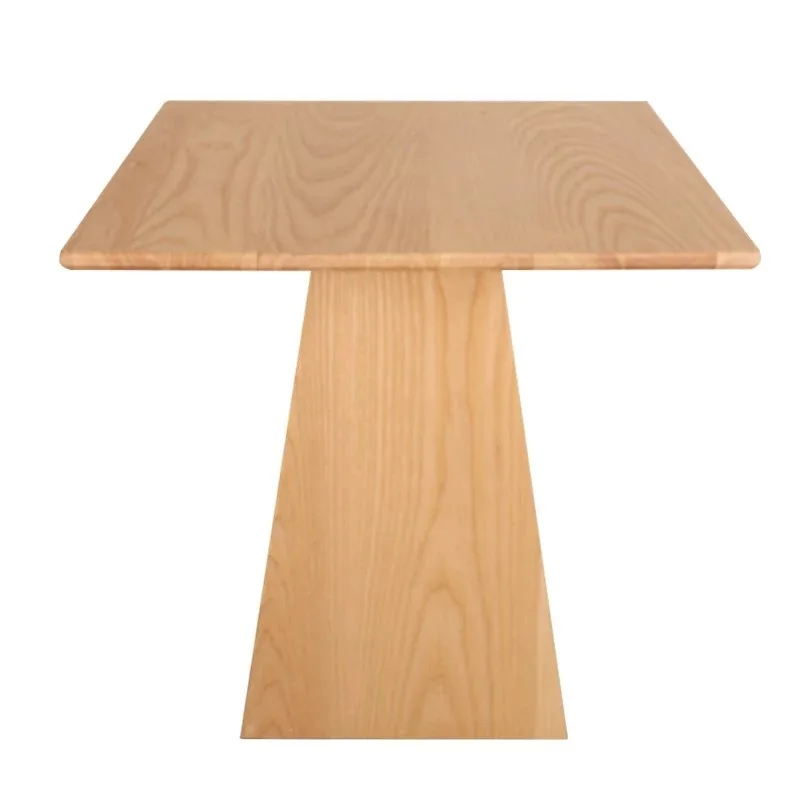
The working rule is simple: any top past 1,800 mm total length gets a third leg, or a base whose footprint covers 60 per cent of the length, and the leaf joint sits over a support rather than between two spans. Where a third leg destroys the knee room, a box or panel base with the same 60 per cent coverage does the same job and seats more guests.
What to write into the order, and what to check on arrival
- Leaf width in mm, cover count at 600 mm per cover, and both the closed and the open dimensions.
- Joint gap 1.0 mm, 1.5 mm maximum, step 0.5 mm, measured at three points after 72 hours at 20 C and 50 per cent RH.
- Substrate and moisture content: engineered core at 8 per cent plus or minus 2 for tops wider than 700 mm.
- Two 8 x 40 mm pins, two latches with 12 mm engagement, slide rating in kg.
- Support rule: third leg or 60 per cent base coverage past 1,800 mm.
- Acceptance: 200 open-and-close cycles, then re-measure the gap. Drift over 0.3 mm means the pins are walking in their holes.
Every top in our commercial extension table tops is measured with a feeler gauge before it is packed, and the reading sheet goes into the carton with the hardware bag.