How we test export chair cartons before they meet a truck
Most transit damage is not a broken chair. It is a broken carton that arrives with a crushed corner, an open seam and a frame that has rubbed through the wrap. We have replaced more rails because of failed cartons than because of weak frames, and the fix almost always sits upstream in the box specification. These are the test sequences and numbers we work to before an order ships.
Published by JPChairs · Chair manufacturer in Foshan, China · 2026-10-28
Three ways a carton fails in transit
Failure modes cluster, which is why one impact test is never enough:
- Corner drop: the box lands on one bottom corner and the load path runs through the chair foot instead of the deck. This is what splits seams and dents the lowest frame tube.
- Top load crush: the bottom tier of a pallet carries seven times its own carton weight, and in humidity the board stops fighting long before the stack is broken down.
- Abrasion: repetitive shock at 2 to 5 Hz polishes through tape and print, so cartons arrive dull grey with open seams even though nothing was ever dropped.
On a 300 carton 40ft load the gap between a tested and an untested specification is typically 4 to 9 damaged cartons per shipment, or USD 600 to 2,400 once re-work and air freight on replacement parts are added.
ISTA 3A: the drop height depends on the weight
ISTA 3A is the sequence we run for single parcel shipments up to 70 kg. Its drop height is not fixed; it is set by gross weight, because heavy packs roll and swing rather than fall clean:
- Under 4.5 kg: 305 mm.
- 4.5 to 9 kg: 254 mm.
- 9 to 13.5 kg: 203 mm.
- 13.5 to 18 kg: 178 mm.
- 18 to 27 kg: 152 mm.
- 27 to 45 kg: 127 mm.
- 45 to 68 kg: 102 mm.
- Over 68 kg: 76 mm.
The sequence covers every face plus one corner on the top and bottom diagonals, so a single run delivers nine to seventeen impacts depending on the pack type. We ask the lab to log all of them, because the second and third hit on a seam tells you more than the first.
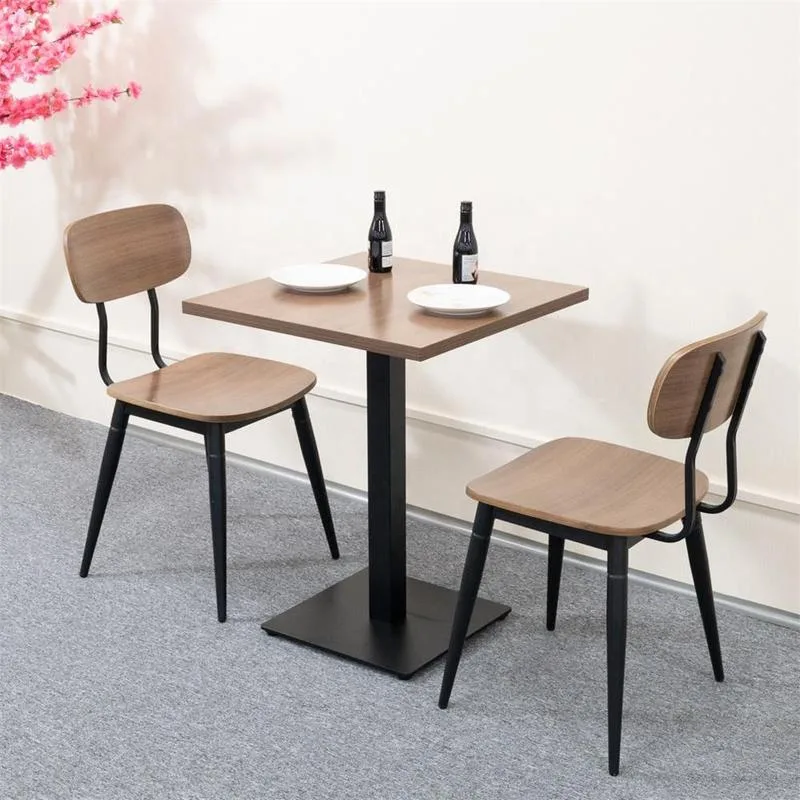
Reality check: a two chair restaurant carton at 21 kg gross sits in the 152 mm band. Adding two plies of board changes nothing measurable, but moving from a 32 ECT single wall to a 48 ECT double wall with a full overlap joint typically lifts the corner drop pass rate from about 70 per cent to above 95 per cent.
What vibration does over 1,500 kilometres
Repetitive shock is gentler than a drop and far more consistent, which makes it the better predictor of what a long voyage actually does to a pallet:
- ASTM D999 method A2: a table running at 2 to 5 Hz with roughly 25 mm of total displacement, good for finding hard contact between frame and board.
- ASTM D4728: a random profile, usually 0.40 to 0.55 Grms shaped across 1 to 200 Hz.
- Duration: 60 minutes of random vibration per axis approximates 1,500 to 2,000 km of truck mileage.
- Typical failure: inner wrap thinner than 0.05 mm with no separation shows a visible polish ring within 20 minutes.
The fix is cheap. We specify a 1.5 mm edge protector on finish critical rails and require physical separation between frames inside the carton; on a 21 kg two chair pack that adds about USD 0.35 and removes the most common abrasion claim in the whole shipment.
Compression: the number the carton has to beat
Cartons must survive their own warehouse stack, and two measured numbers decide that. The board's edge crush test, run to TAPPI T811 or ISO 3037, and the finished box compression strength, run to ASTM D642.
- Estimate from board: the McKee approximation gives BCT equal to 5.876 times ECT times the square root of caliper multiplied by box perimeter, with ECT in lb per inch.
- Worked example: a 48 ECT double wall at 7.0 mm caliper with a 2,000 mm perimeter returns about 1,313 lb, or 595 kg.
- The load it must clear: eight cartons high at 21 kg means the bottom box carries 147 kg.
- Safety factor: multiply by 4.0 for a normal 90 day warehouse turn, and by 5.5 for shipping into 80 per cent plus relative humidity or storage beyond 120 days.
Our example clears 147 x 4.0, which is 588 kg, but it does not clear 147 x 5.5, which is 809 kg. That single line is the most useful number on any packaging specification for a tropical import.
Preconditioning: humidity removes more strength than handling
Corrugated board is hygroscopic. Run the same box dry and then at 90 per cent relative humidity and it is not remotely the same box.
- Standard condition: 23 degrees C and 50 per cent RH for 72 hours before testing, to ASTM D4332.
- Tropical condition: 40 degrees C and 90 per cent RH, also 72 hours, and worth paying for on every order routed through the tropics.
- Strength loss: board conditioned at 90 per cent RH can lose 40 to 55 per cent of its compression strength versus the 50 per cent condition.
- Board moisture: specify 8 per cent plus or minus 2 per cent at dispatch; above 12 per cent the box softens on the vessel even with desiccant in the container.
This is why we request the tropical precondition on any routing with more than 25 days at sea. The extra cost is a few hundred dollars against re-boxing an entire shipment at the destination.
Turning it into a specification buyers can enforce
Purchase specifications should let anyone re-test next year and reach the same verdict. Ours fits on one page:
- Board: grade it by ECT and burst rather than ply count, state the caliper and the joint type, and require full overlap seams instead of butt seams.
- Box: internal dimensions with tolerances, gross weight range, units per carton and the closure method.
- Accept criteria: no split longer than 25 mm at any seam, no corner crush deeper than 6 mm, no frame contact with the board, and every chair passing its assembly torque check afterwards.
- Cadence: qualify once per carton drawing, then re-test within five working days of any change of board mill, caliper or closure tape.
One full ISTA 3A run costs USD 250 to 600 per carton type and takes three to five working days. That cost is why most problems trace back to a board substitution nobody re-tested. Current carton drawings and test summaries are available through the factory carton test reports, standard ranges sit with the commercial restaurant chair specifications, and the question of who pays for transit damage is answered on the transit damage FAQ.