Steam-bent back posts: radius, springback and rejects
Bent back posts are where a wooden chair earns its price and where it fails first. The radius is easy to draw and hard to hold, and every number that matters sits between the steam chamber and the radius gauge.
Published by JPChairs · Chair manufacturer in Foshan, China · 2026-11-18
Sawn, bent or laminated
Not every curved part should be bent. A back post that curves through a 200 mm radius over 300 mm of length is a bending job. The same curve cut from a solid block wastes 60 to 70% of the timber and puts short grain at the shoulders, which is exactly where back posts snap.
- Minimum bend radius for solid stock is 8 to 10 times the thickness: a 25 mm post reaches about 200 to 250 mm inner radius before the inner face crushes.
- Below that radius the part moves to lamination: 1.8 to 2.5 mm plies, 7 to 9 layers for a 25 mm finished post.
- Species decide the rest. Ash and beech bend predictably, oak bends with more springback, and dense species with interlocked grain split instead of bending.
Moisture and steam time before the jig
Steam bending works by softening lignin, and lignin softens at about 100 C in saturated steam. Stock goes into the chamber at 25 to 30% moisture content, not at the 8 to 10% it will ship at, so the kiln schedule has to leave a deliberate window for bending before final drying.
- Steam time runs about 1 minute per mm of thickness: 25 mm gets 25 to 30 minutes, 32 mm gets 35 to 40 minutes.
- Over-steaming by 50% softens the outer fibres too far and pushes the failure from the outer face to the inner radius.
- Under-steaming shows up as a part that springs back 12 to 15% instead of the expected 5 to 8%.
- Grain slope kept under 1:15 and knots excluded within 150 mm of the bend; a knot in the bend zone is a guaranteed reject.
Overbend, hold time and springback
Every bent part springs back when the clamps come off. On ash at 25 to 30 mm thickness, springback lands at 5 to 8% of the bend, so jigs are machined 5 to 10% tighter than the drawing and the first three parts off a new jig are measured before the run continues.
- Parts stay clamped 24 hours minimum, 48 hours for 32 mm stock, before the jig is opened.
- Then 7 days of free rest at 20 to 25 C and 50 to 60% RH, until a pin meter reads 8 to 10% moisture.
- Finished radius tolerance is ±2 mm on an R220, checked with a radius gauge at three points along the curve.
- Twist over 400 mm is capped at 1.5 mm. A twisted post throws the back rail out of square by the same amount and the chair will not sit flat on four legs.
Compression failure on the inner radius
The inner face of a bend takes compression and fails before the outer face tears. Failure reads as fine wrinkles across the grain, then as a fold 0.5 to 1.0 mm deep that only shows once the finish goes on.
- Reject rate on solid bends runs 3 to 6% in normal production; above 8% either the steam schedule or the grain selection is wrong.
- The 1.0 to 1.5 mm spring steel back strap over the outer face holds the outer fibres and forces failure to the inner face where it can be seen.
- End stops and 0.3 to 0.5 MPa clamping pressure spread load along the jig instead of concentrating it at the two ends.
- Any post with a fold deeper than 0.3 mm is scrapped. Filler hides it for one season and the fold telegraphs through the lacquer after that.
Laminated bends and what they cost
Where the radius drops under 200 mm, or the section goes over 35 mm, lamination takes over. Seven to nine plies at 1.8 to 2.5 mm, glued with urea-formaldehyde or PUR and pressed at 0.6 to 1.2 MPa for 45 to 90 minutes, come out of the press closer to net shape than any bent solid.
- Solid bent post 3.80 to 5.20 USD; laminated post 2.60 to 3.60 USD at the same finished section, because there is no 60 to 70% block waste.
- Laminated bends hold radius within ±1.0 mm and spring back under 2%, since each ply carries a fraction of the stress.
- Glue lines show under an open-pore finish. Where the client wants clear lacquer over visible grain, solid bending is the only honest option.
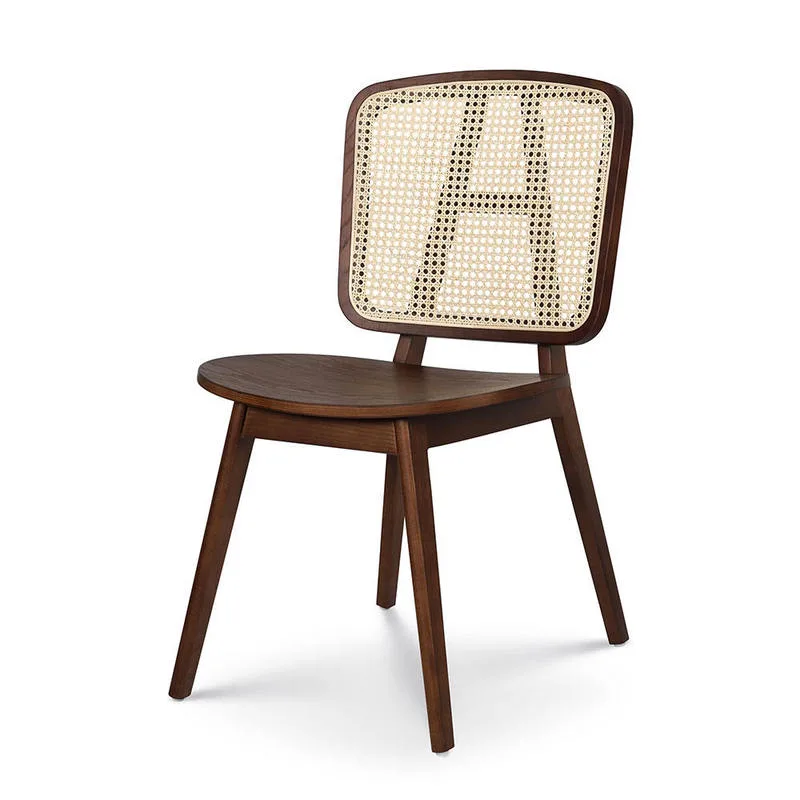
- The steam-bent solid wood chairs we build use solid bends on the back posts and laminated bends only where the radius demands it.
Inspection, machining and load checks
Bent posts are machined only after they stop moving. Cutting mortises at day two and shipping at day five is how a batch ends up 3 mm out of square at the customer, with the blame landing on the assembler.
- Mortises and dowel holes cut after the 7-day rest, at 8 to 10% moisture, on a jig that references the bend rather than the ends.
- Back post static load of 400 N at the top for 1 minute, with permanent set under 0.5 mm.
- EN 16139 level 1 fatigue runs 200,000 cycles at 120 kg on the seat with 150 N on the back; bent posts usually pass the seat test and fail at the back, which is why testing happens on the assembled chair.
- Packing nests 24 to 36 posts per carton, curve against curve, in about 0.02 m3 with 15 mm paper between parts. The OEM bent back post drawings we work from fix the radius, the grain direction and the moisture at machining.