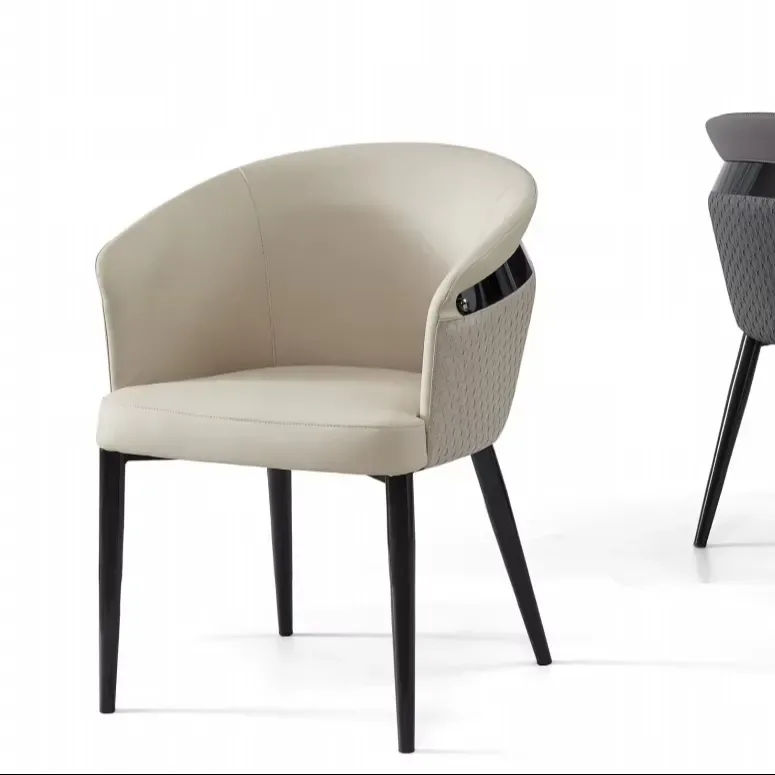
Iron chair welding fixtures: datums, weld shrinkage compensation, the dimension chain from tube cut to floor pad and the daily checks that catch drift
The welded iron chair is only as accurate as the fixture it was welded in. The tube can be cut right and the weld can be sound and the chair can still come off the table 3 mm tall and rocking. This is how we build and check the fixtures behind our iron frames, and where the tolerance actually goes.
Published by JPChairs · Chair manufacturer in Foshan, China · 2026-11-09
The fixture is the drawing
Every iron chair model runs on a steel fixture weighing 200 to 350 kg, with datum faces machined after a stress-relief ageing cycle so the fixture itself does not move. The chair dimensions live in that fixture, not in the operator's hands: the clamping order is fixed, datum rails first, then legs against machined stops, stretchers last so they close into a frame that is already located.
The new fixture is not released on one good chair. We weld five first articles, let them cool fully and measure each on a granite table against the drawing. Only when all five pass does the model move to production, and the fixture gets an identification plate tying it to the drawing revision, so a changed leg splay means a changed fixture and a new five-piece check.
Weld shrinkage is planned, not discovered
Each fillet weld shrinks the joint by 0.5 to 1.0 mm as the bead cools, at our MIG settings of 180 to 220 A with 1.0 to 1.2 mm wire. A chair with eight welded joints loses 4 to 8 mm of overall size if nobody compensates, and that shows up as a low seat and a narrow base.
Compensation is cut into the parts. Front legs are cut 1.5 mm over length, the base splay is pre-set 1.5 degrees wide so shrinkage pulls it back to the 400 mm drawing dimension, and every joint is tacked with four 5 to 8 mm tacks before the full bead goes in. The weld sequence runs from the outside joints inward, so each bead shrinks into a frame that is still clamped and can absorb it. With that sequence, seat height lands at 450 plus or minus 2 mm instead of 450 minus 5.
The dimension chain from tube cut to floor pad
Tolerance stacks are why two chairs from the same batch can differ. Our chain runs tube cut length at plus or minus 0.5 mm, fixture location at plus or minus 0.5 mm, compensated shrinkage at plus or minus 1.0 mm, and the floor pad plane at plus or minus 0.5 mm. Worst case that is 2.5 mm, which is why legs are positioned from a single machined datum face rather than chained off the previously welded part wherever the design allows.
The numbers we hold on a finished frame: seat height plus or minus 2 mm, base splay 400 mm plus or minus 3 mm, diagonal across the seat within 2 mm at a 500 mm span, and the four pads level within 0.5 mm. A frame that misses on the diagonal will rack under load later, so the diagonal check is the one that predicts the warranty call, not the seat height.
Fixture wear and the daily check
Clamp pads wear and locating pins open up, and a fixture that was accurate at 500 frames is not accurate at 15,000. We re-dress clamp pads every 8,000 to 10,000 weld cycles and replace locating pins when they measure 0.2 mm of wear, which is about every three to four months on a busy model.
Every first shift starts with a 10-minute fixture check: plug gauges into the two primary locating pins and one master frame clamped and measured against three control dimensions. If the master reads out, the fixture is tagged and every frame welded since the last good audit goes back to inspection. That batch recall rule is what keeps a worn pin from quietly shipping 300 rocking chairs.
Post-weld inspection that catches drift
Every 20th frame comes off the line for a full check on granite: four-pad level within 1.0 mm difference, diagonals within 2 mm, backrest rake within 1 degree of drawing. The frame also gets a rocker test, a 2 kg push at one corner with nothing lifting more than 1 mm off the table.
Once a week we stack 30 finished frames and measure the stack lean, which must stay under 20 mm over the stack height. Stacking is the customer's own acceptance test, so we run it before they do. Frames from a flagged fixture skip the 1-in-20 sampling and go through 100 percent until the fixture passes a fresh master check.
What the buyer should ask a weld shop
Two questions separate a fixture-driven shop from one welding freehand: which dimensions are fixture-controlled, and what the daily fixture check is. A shop that answers with a control dimension list and a first-shift routine will hold seat height at plus or minus 2 mm for the life of the order. A shop that answers with we check them by hand will ship you a batch that rocks.
The iron chairs welded to fixture tolerances we build carry the fixture-controlled dimensions on the spec sheet, so the same model comes out of a re-run identical to the first batch. For the sampling and recall rules behind those numbers, the fixture-based weld inspection workflow page walks through the checks in the order an inspector would run them.