Powder coating adhesion on iron chair frames
Powder coating fails for boring reasons: too thin a film, a rinse tank that has drifted, or a part that never reached cure temperature. None of the three shows up in a visual check, and all three show up eighteen months later as peeling at the welds.
Published by JPChairs · Chair manufacturer in Foshan, China · 2026-11-06
Film build: where the coating actually wears
We specify dry film thickness by zone rather than as a single number, because a chair is not coated evenly and pretending otherwise hides the thin spots. Visible flat faces run 60 to 90 microns. Armrest tops, footrest rings and the seat rail where shoes and chair backs hit run 80 to 120 microns. Cut edges, weld toes and the inside of tube ends have to reach 40 microns minimum, and that is the number that decides whether a frame passes.
- Below 50 microns: salt spray life drops from roughly 720 hours to 300 hours on the same pretreatment.
- Above 140 microns: impact cracking at tube bends and visible orange peel; the film is thick, not strong.
- Measurement: five readings per frame on an ISO 2178 magnetic gauge, recorded per batch, not averaged into one headline figure.
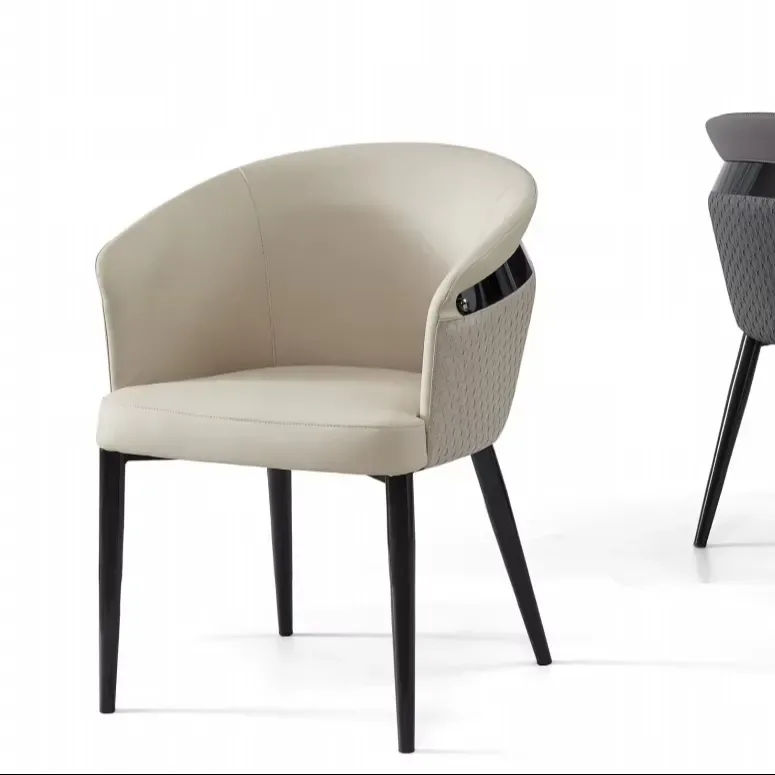
The frames we build are listed under powder coated iron dining chairs, and each batch ships with its thickness and salt spray record attached.
Pretreatment is 70 per cent of the result
Powder does not bond to steel, it bonds to a conversion coating. A three-stage wash is enough for indoor frames if it is maintained; a five-stage line is what we run when a buyer asks for 720 hours of salt spray.
- Degrease: 55 to 60 C for 3 to 5 minutes, with the bath alkalinity checked daily rather than weekly.
- Rinse: final rinse conductivity under 30 microsiemens per centimetre; above that, dried salts sit under the film.
- Conversion coat: chromate-free zirconium or iron phosphate at 0.3 to 0.8 g per square metre. A strip test takes 1 to 3 minutes and is the cheapest check on the line.
- Dry-off: 110 to 120 C so the part enters the booth dry, with no water trapped at weld overlaps.
Bare steel that has been washed and not yet converted will flash rust within 30 minutes in a humid plant, so the window between rinse and booth is a scheduling rule, not a suggestion.
Cure is about metal temperature, not oven setting
An oven set to 200 C does not mean the part reaches 200 C. A 1.5 mm tube climbs fast; a 3 mm wall with a welded boss can lag 15 to 25 minutes behind the oven probe. We cure to peak metal temperature, measured with a contact datalogger on the heaviest joint in the load.
- Target: 180 to 200 C peak metal temperature, held 10 minutes.
- Under-cure: fails the solvent rub, then fails the cross-cut within a season. Film looks perfect on day one.
- Over-cure: above 210 C, gloss falls 3 to 6 units and white and light greys shift about 1.5 delta E, which is visible against a batch made the week before.
Because cure and colour are linked, we run one cure profile per colour per shift and keep the datalogger chart with the batch card.
The four tests that catch a bad batch
Visual inspection passes almost anything. These four checks are what we run before a frame is packed, and they are the same checks a buyer's third-party inspector will run.
- Cross-cut, ISO 2409: 1 mm lattice, 6 by 6 cuts, tape pull. Gt0 or Gt1 passes; anything shedding squares at the weld goes back for strip and recoat.
- Impact, ISO 6272: falling dart with a 4 mm indenter at 40 kg-cm. The film may dent with the steel, but it must not crack or flake off the dent.
- Solvent rub: 50 double rubs with methyl ethyl ketone. Under-cured film softens and dulls inside 20 rubs.
- Salt spray, ISO 9227: 480 hours neutral for indoor frames, 720 hours for hospitality and coastal. Scribe creep must stay within 2 mm on each side of the line.
The sequence matters more than any single result: a Gt0 cross-cut on an under-cured film is not a pass, it is a film that has not finished crosslinking. Our coating inspection workflow runs the solvent rub first for exactly that reason.
Edges, welds and the Faraday cage effect
Powder is applied electrostatically, so geometry fights coverage. Sharp corners, recessed weld toes and the inside of a closed frame draw less powder than a flat panel, and the difference is measurable.
- Corner radius: R1.5 minimum on all exposed edges. A sharp 90 degree arris holds 20 to 30 microns and is where rust starts.
- Weld toes: 25 to 40 per cent lower film than the surrounding tube on a single pass. We either double-pass the joint or add a zinc-rich primer at the weld before topcoat.
- Tube ends: every closed section gets a 6 mm weep hole, coated through, so water that enters during washing or rain can leave.
- Touch-up: 2-part epoxy at 60 microns on assembly scratches, not a marker pen.
Rework is stripped chemically or burned off at 400 C. Shot blasting a 0.8 mm wall tube to remove coating dents the tube and creates the next adhesion problem.
Colour control and how the frames ship
Powder batches vary. We hold a master plaque per colour and reject any batch above 0.8 delta E against it under D65, with gloss held at 30 to 40 units plus or minus 5 for textured finishes. A buyer who orders 400 chairs in three shipments is far more sensitive to a shift between shipments than to the absolute colour itself.
- Cure to pack: 24 hours minimum, so the film is hard enough for PE foam contact without imprinting.
- Packing: PE foam or honeycomb between frames, no PVC film against a textured surface in summer.
- Documentation: thickness readings, cross-cut result and salt spray hours on the batch card, one page per shipment.
The factory powder coating booths run the same profile for sample and bulk, so an approved sample and the production run come off identical settings.