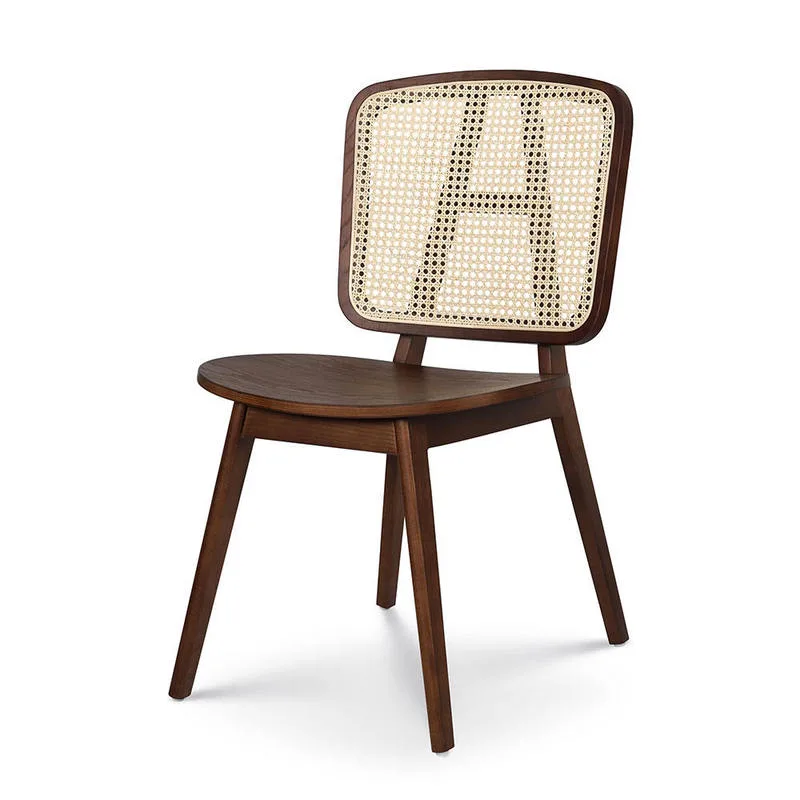
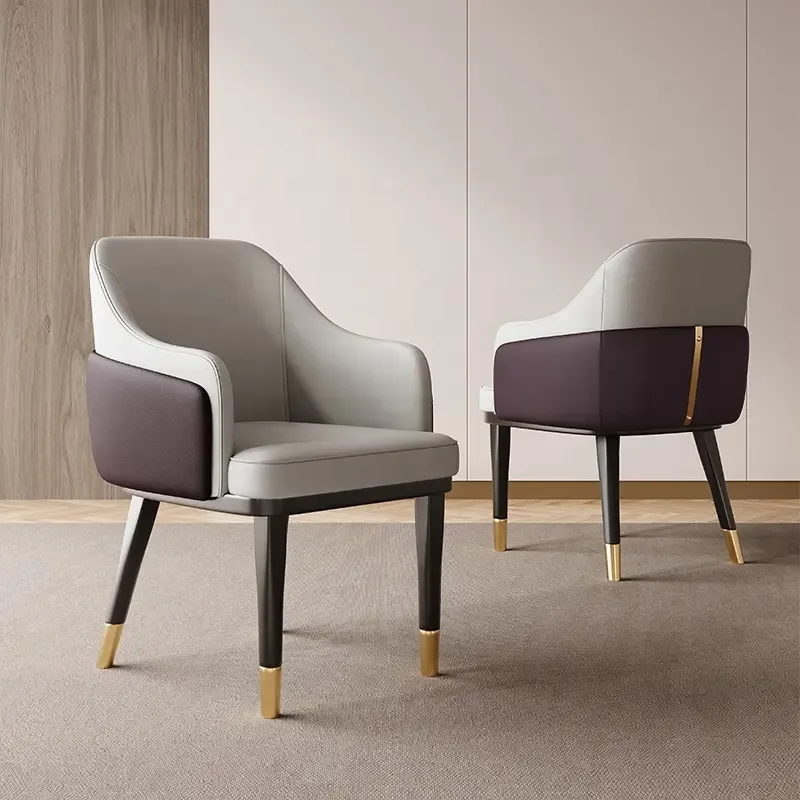
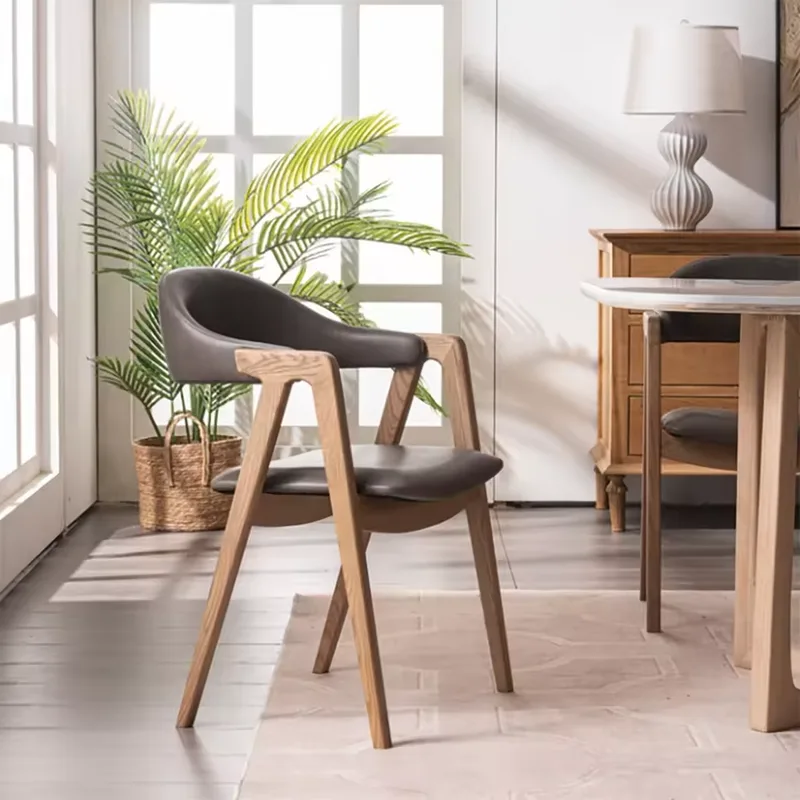
Formaldehyde and VOC limits for export chairs
Nobody orders a chair for its formaldehyde reading. Then a customs officer, a procurement clerk or a hotel group compliance team asks for the certificate, and one number decides whether the container clears.
Published by JPChairs · Chair manufacturer in Foshan, China · 2026-10-19
Where the emission actually comes from
Formaldehyde is almost never added to a chair. It arrives in the glue line of every composite panel and in the solvent of the finish, and it leaves slowly for months. On a solid oak frame with an oil finish the reading sits close to background; on a chair with a plywood seat shell it is the one number that can stop a shipment.
- Panel core: urea-formaldehyde resin off-gasses for 6 to 18 months after hot pressing, and roughly 60 per cent of everything a panel will ever release leaves in the first 90 days.
- Cut edges: an unsealed plywood edge emits 2 to 4 times more per square centimetre than a lacquered face, which is why the underside of a seat shell always reads highest.
- Finish: solvent-based PU carries 500 to 700 g/L of VOC, water-based systems run below 100 g/L, and the matte topcoat we use sits under 30 g/L.
- Upholstery adhesive: contact cement is the largest VOC source under a fabric cover; water-based adhesive removes 60 to 80 per cent of it.
- Packing too early: a chair boxed within 48 hours of finishing reads 30 to 50 per cent higher than one held 10 days in a ventilated stack.
The four limits you will be asked for
Two things catch buyers out. The same molecule is measured in three different units, and a mill that quotes one usually has no idea about the others.
- GB 18580-2017 E1 (China): 0.124 mg/m3 by the 1 m3 chamber method. It is the legal floor of the domestic market and the default grade from most Chinese mills.
- EN 717-1 with EN 13986 Class E1 (EU): 0.124 mg/m3 after 28 days of conditioning at 23 C and 45 per cent relative humidity.
- TSCA Title VI and CARB Phase 2 (US): hardwood plywood 0.05 ppm, particleboard 0.09 ppm, MDF 0.11 ppm. It covers every composite component, including a 6 mm plywood seat shell, unless the product as a whole stays under 144 square inches, or 0.093 m2, of regulated composite wood.
- JIS A 1460 four-star (Japan): desiccator method, average 0.3 mg/L and maximum 0.4 mg/L. Buyers there ask for it by name and expect the star printed on the export carton.
- French DEVL1101903D: TVOC at 28 days must be under 10 micrograms/m3 for class A+, 50 for A, 200 for B and 1,000 for C. French school and hospital contracts ask for A+.
There is no conversion table between those units that a certificate reader will accept. A supplier handing you 0.4 mg/L desiccator has not answered a 0.124 mg/m3 chamber question.
What each reduction costs per chair
On a 500-unit run the full menu adds roughly USD 6 per chair. Most projects need two items off it, not five.
- E0 panel instead of standard E1: USD 2.40 to 4.10 per chair depending on panel area; a typical restaurant seat shell uses 0.18 m2.
- MDI adhesive instead of urea-formaldehyde: USD 1.10 to 1.90 per chair, and it is also the change that holds up best above 70 per cent relative humidity.
- Water-based lacquer instead of solvent PU: USD 0.80 to 1.60 per chair plus 4 to 6 extra drying hours per batch of 300.
- Sealing all six faces of a panel rather than the two visible ones: USD 0.35 to 0.70, and on its own it removes 30 to 50 per cent of the measured emission.
- Testing: USD 320 to 680 per material set, 7 to 14 working days. A whole-chair test rather than a material test costs USD 450 to 900 because of the 28-day conditioning.
We hold signed reports for 12 months per material set, and a change of panel mill restarts the clock.
How the number is held across a batch
Certificates are cheap to buy and easy to fake. What keeps a shipment consistent is control at four points.
- Incoming panels: two approved mills only, a chain of custody document with every delivery, and a spot check with a calibrated handheld meter at 24 C and below 60 per cent humidity, four samples per pallet.
- Pressing: hot press at 105 to 115 C for at least 60 seconds per mm of panel thickness. Shorter cycles leave unreacted resin, which is why cheap plywood still smells new a year later.
- Drying-off: finished components rest 10 to 14 days in open racks before boxing. That alone drops the reading 20 to 35 per cent against same-day packing.
- Retention: one retained panel per lot, kept 12 months, so a disputed result gets re-tested rather than argued.
The panel grades we stock are listed on the factory material specifications, and the documents issued with every shipment are itemised on the export documents FAQ.
Four lines to write into the purchase order
"Low formaldehyde" is not a specification. These four lines are.
- Standard and limit together: EN 717-1 at 0.124 mg/m3, or JAS four-star at 0.3 mg/L desiccator average. Never the grade name alone.
- Method and frequency: chamber test per panel set once per 12 months, and again on any mill or adhesive change.
- Scope: every composite component, including the seat shell, plywood underlay and any MDF moulding, not only the visible top panel.
- Documents: third-party report no older than 12 months, a TSCA Title VI statement for US entries, and the French A+ label where the project is public sector.
When the upgrade buys nothing
The solid wood chair finished with oil or water-based lacquer, with no plywood and no MDF anywhere in the build, measures below 0.02 mg/m3 in most cases. Paying for E0 panels on it adds USD 2 to 4 per unit for a number nobody will read.
- Buy the upgrade when the chair has a plywood seat shell, an upholstered panel or a veneered substrate.
- Buy it whenever the buyer is a hotel group, a school, a hospital or any public tender, whatever the construction, because their compliance team will ask.
- Skip it on a small solid-wood run going to a private home or an independent restaurant where no one opens the certificate.
- One caution: veneer over MDF counts as composite, and so does bamboo laminate and plywood used as a 3 mm underlay. If any of them are in the build, the question comes back.